
Between the North and Middle rivers
Asphalt Paving in Carlisle, IA
A river town where the first settlement washed away in 1851.
- Every estimate is free and in writing
- City right-of-way permits identified before the schedule is set
- Base, thickness and drainage spelled out line by line
Paving on River Ground
Asphalt paving in Carlisle starts with water. Carlisle lies between the North River and the Middle River near where they meet the Des Moines River, at 771 feet, the lowest elevation of any town we serve. Its predecessor, Dudley, was destroyed by the Flood of 1851, and Carlisle was laid out that year by Jeremiah Church and David Moore on the third try. When the railroad arrived in 1871, the main business district moved down into the valley. The 2020 census counted 4,160 residents.
Low ground and driveways
On low, river-influenced ground, soil stays wetter longer. Water in the base freezes and heaves the asphalt in winter, then leaves soft spots in spring. On Carlisle driveways we dig out soft material, use more crushed stone, compact it in layers and slope the surface to drain. A well-drained base outlasts extra asphalt thickness.
Two counties
Carlisle sits in Allen Township in both Warren and Polk counties. Rural properties outside town on Warren County roads fall under the county's Chapter 19 entrance ordinance: a permit before work, culverts of at least 18 inches where needed, and residential paved entrances with at least 8 inches of asphalt. Entrances must be at least 300 feet from intersecting roads.
Older homes
Carlisle has a long history, including the Carlisle Flouring Mills building completed in 1856 and a schoolhouse from 1853. Many homes are older, with driveways that have been patched repeatedly. We tell you whether the base can be saved.
Trails and traffic
The Summerset Trail has its northern end in Carlisle. Lots near the trailhead and in town see cars, bikes and walkers; clear striping and smooth surfaces help.
Our approach
We start with drainage, then base, then asphalt. You get a written quote with every part listed.
Older homes and new
Carlisle's population has grown steadily, from 3,497 in 2000 to 4,160 in 2020. New homes up on the hills have different needs from the older houses in the valley. Valley homes need the most base and drainage work; hillside homes need supported edges and runoff control.
Planning
In spring, after the frost leaves the ground, is the best time to look at a heaving driveway. The damage is easiest to see then, and work can be scheduled for early summer.
Carlisle Facts
- River setting. Carlisle lies between the North River and the Middle River near their confluence with the Des Moines River, at an elevation of 771 feet.
- Flood origins. Carlisle's predecessor, Dudley, was destroyed by the Flood of 1851; Carlisle was laid out that year and incorporated in 1870.
- Warren County entrances. Warren County Chapter 19 requires a permit for each entrance, culverts at least 18 inches in diameter where needed, and entrances at least 300 feet from intersecting roads.
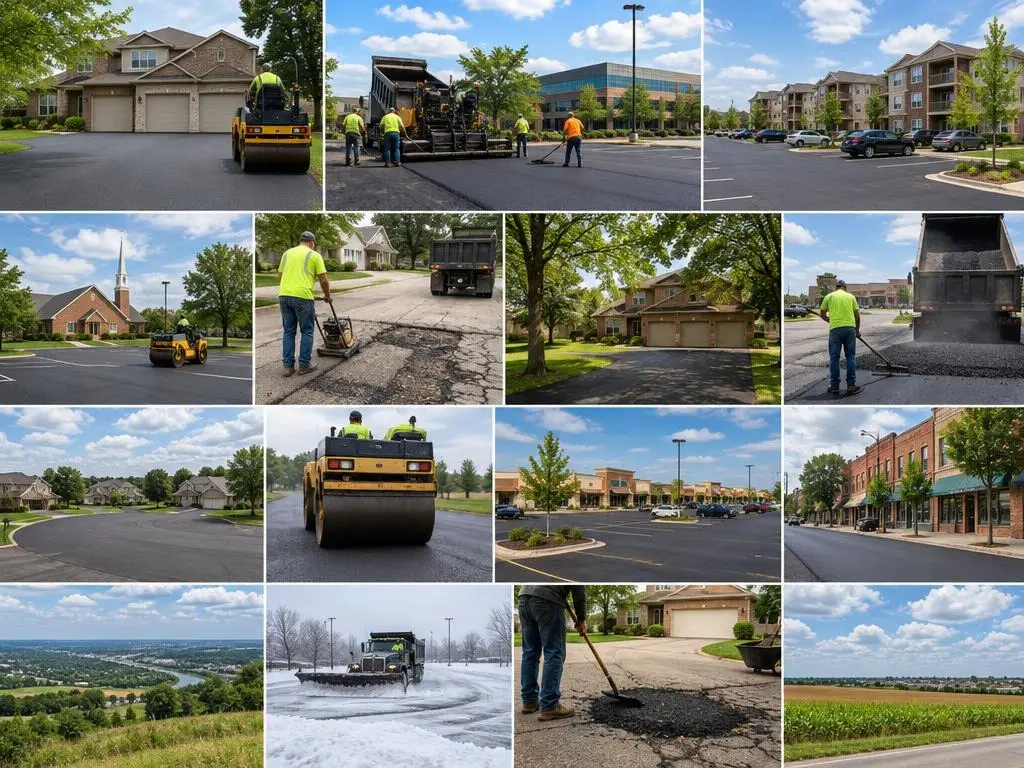
Our Services in Carlisle, IA
Carlisle Questions
My Carlisle driveway heaves every winter. Why?
Low ground near the rivers stays wet, and water in the base freezes. More stone, better compaction and slope usually fix it.
Which county rules apply to my rural drive?
If your road is a Warren County road, Chapter 19 applies. We confirm which county maintains your road.
Is thicker asphalt the answer?
Not by itself. Drainage and base matter more on wet ground.
Free Estimates in Carlisle, IA
Free estimates for Carlisle driveways and rural entrances.
Asphalt Paving Near Carlisle
- Asphalt Paving in West Des Moines, IA
- Asphalt Paving in Des Moines, IA
- Asphalt Paving in Clive, IA
- Asphalt Paving in Urbandale, IA
- Asphalt Paving in Windsor Heights, IA
- Asphalt Paving in Waukee, IA
- Asphalt Paving in Johnston, IA
- Asphalt Paving in Grimes, IA
- Asphalt Paving in Ankeny, IA
- Asphalt Paving in Altoona, IA
- Asphalt Paving in Pleasant Hill, IA
- Asphalt Paving in Norwalk, IA
- Asphalt Paving in Indianola, IA
- Asphalt Paving in Cumming, IA
- Asphalt Paving in Van Meter, IA
- Asphalt Paving in De Soto, IA
- Asphalt Paving in Adel, IA
- Asphalt Paving in Dallas Center, IA
- Asphalt Paving in Granger, IA
- Asphalt Paving in Bondurant, IA
- Asphalt Paving in Winterset, IA